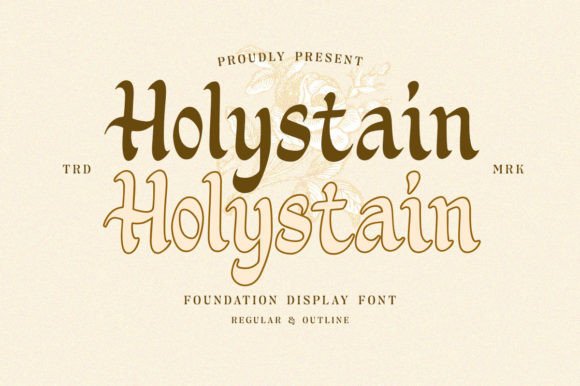
Holystain Font for Web Design
Holystain is a Foundation display font that perfectly balances sophistication and approachability. Its classic charm makes it perfect for more traditional designs, while its casual feel makes it good for modern web projects. As a designer working on websites, landing pages, and digital products, I’ve found Holystain to be a versatile tool in my typography toolkit.
Visual Characteristics and Digital Appeal
Holystain belongs to the Blackletter category, which means it carries the distinctive, ornate strokes and character of historical typefaces. However, it's not overly complex or difficult to read, making it suitable for both decorative and functional use on the web. The font has a refined yet friendly personality, which allows it to fit into a wide range of design contexts—from creative portfolios to boutique online stores.
Its structure supports readability even at smaller sizes, which is essential when designing for mobile screens or responsive layouts. The subtle variations in stroke weight and spacing help maintain visual clarity without sacrificing the font’s stylistic appeal.
Applying Holystain in Web Design Projects
Holystain works exceptionally well as a hero title or section heading in website headers, landing pages, and product banners. It adds a touch of elegance to call-to-action areas, encouraging user engagement without overwhelming the layout. For example, using Holystain on a coaching website can communicate professionalism while maintaining a warm and inviting tone.
In an online store, Holystain could be used for banner headlines or promotional graphics, helping to draw attention to key offers or new arrivals. On a portfolio site, it can serve as a header for project sections, reinforcing a sense of craftsmanship and dedication.
When designing digital ads or course sales pages, Holystain’s clean lines and balanced proportions make it ideal for short phrases and taglines. It complements both light and dark backgrounds, ensuring that the text remains legible across different design scenarios.
Readability and Visual Hierarchy
One of the most important aspects of any font is how it affects readability and visual hierarchy. Holystain excels in this area by providing enough contrast between characters to ensure that text is easy to scan, especially in content-heavy sections like blog headers or editorial designs.
Using Holystain for section headings helps create a clear visual rhythm, guiding users through the content with ease. When paired with a simple sans serif font for body copy, it enhances the overall reading experience, allowing the reader to focus on the message without being distracted by overly ornate typography.
For mobile screens, it's crucial to test Holystain at various sizes to ensure it remains legible. A good rule of thumb is to avoid using it for long paragraphs or small buttons where readability might suffer. Instead, reserve it for decorative accents, logo text, or supporting typography that doesn’t require high levels of comprehension.
Font Pairing and Brand Identity
Font pairing plays a significant role in establishing a cohesive brand identity. Holystain, being a display font, pairs beautifully with clean, modern sans serif fonts for body text. This combination ensures that the design feels both professional and approachable, which is especially useful for SaaS brands or creative agencies looking to build trust with their audience.
If your brand leans more towards an editorial or storytelling style, consider pairing Holystain with a serif font that shares similar characteristics in weight and proportion. This creates a harmonious look that reinforces the brand’s voice and visual language.
For digital templates or brand kits, including Holystain as a primary display font can help maintain consistency across all platforms. Whether you're designing social media graphics, packaging materials, or email newsletters, the font’s versatility ensures it adapts well to different formats and mediums.
Practical Considerations for Web Use
Before implementing Holystain on a live website, it's important to check the available styles, file formats, and webfont compatibility. Ensure that the font includes the necessary weights and alternates for your specific design needs. If multilingual support is required, confirm that the font covers the characters needed for your target audience.
Commercial font licensing is also a critical factor, especially when working on client projects, online stores, or digital templates. Make sure you have the appropriate license to use Holystain across all intended platforms, including websites, mobile apps, and print materials.
By carefully selecting and implementing Holystain in your design workflow, you can enhance the visual appeal and usability of your digital projects. Its unique blend of tradition and modernity makes it a valuable asset for any designer looking to create engaging and memorable brand experiences.